
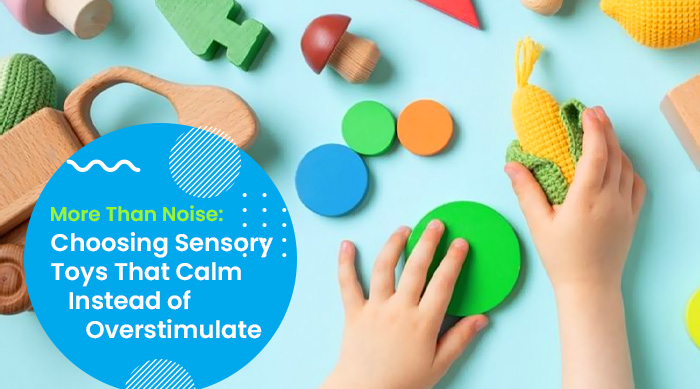
More Than Noise: Choosing Sensory Toys That Calm Instead of Overstimulate
Walk into almost any toy shop across Australia, and you will be greeted by an avalanche of bright plastic, flashing LED lights, and piercing electronic sound effects. These items are often marketed as “essential sensory development tools” for babies and toddlers. However, early childhood educators and paediatric occupational therapists are sounding the alarm: many of these popular products are doing the exact opposite of what young minds actually need.
Instead of fostering curiosity and focus, over-stimulating playthings overload a child’s developing nervous system. For Australian parents and early learning centres dedicated to promoting calm, resilient behaviour, it is time to look past the marketing noise. True sensory play is not about overwhelming the senses; it is about providing thoughtful, regulating experiences that help children ground themselves, process their environment, and thrive.
The Neuroscience of Sensory Processing in Early Childhood
To understand why certain play materials calm a child while others trigger emotional meltdowns, we must look at how young brains process external information. From birth to age five, a child’s brain forms more than one million new neural connections every second. During this critical window, children explore the world through seven distinct sensory systems:
- Tactile: Touch, texture, and temperature.
- Visual: Sight, light intensity, and spatial perception.
- Auditory: Sound frequency, volume, and rhythm.
- Olfactory & Gustatory: Smell and taste.
- Proprioceptive: Body awareness, muscle feedback, and joint pressure.
- Vestibular: Balance, movement, and spatial orientation.
When a toy flashes lights while playing loud, high-pitched music and moving unpredictably, it floods the visual and auditory pathways simultaneously. A toddler’s prefrontal cortex—the part of the brain responsible for impulse control and emotional regulation—is still in its earliest stages of development. When flooded with competing sensory signals, the nervous system shifts into a defensive stress response. What looks like a fun, high-energy toy can rapidly lead to exhaustion, irritability, and behavioural dysregulation.
Calming vs. Overstimulating Sensory Tools
Understanding the difference between passive entertainment and active, grounding engagement is key when curating play spaces at home or in an early learning environment.
| Feature | Overstimulating Toys | Calming Sensory Tools |
| Control | Toy dictates the play (battery-driven) | Child directs the play (open-ended) |
| Auditory Input | High-pitched, electronic, repetitive | Soft, natural, or silent |
| Visual Input | Rapidly flashing, multi-colored LEDs | Earthy tones, natural light, slow motion |
| Physical Feedback | Smooth, uniform plastic | Variable textures, weighted resistance |
| Impact on Brain | Triggers hyper-arousal and fatigue | Promotes focus, regulation, and deep play |
Key Categories of Regulating Sensory Play
When choosing materials for your home or selecting an early learning centre that prioritises emotional well-being, look for resources that target proprioceptive and deep tactile inputs. These specific inputs act as natural anchors for the nervous system.
- Proprioceptive “Heavy Work” Tools
Proprioception—the sense of where our body is in space—is the ultimate sensory regulator. Pushing, pulling, lifting, and carrying heavy or resistant objects releases serotonin and dopamine in the brain, creating a sense of calm groundedness.
- Weighted Lap Pads or Soft Toys: Gentle, distributed weight provides a grounding effect during storytime or quiet rest periods.
- Resistance Bands & Resistance Tubing: Simple bands wrapped around chair legs allow energetic children to push their feet against firm resistance while working at a table.
- Climbing & Carrying Gear: Wooden climbing frames, weighted play blocks, and heavy water jugs during outdoor play help burn off nervous energy constructively.
- Open-Ended Tactile Play
Children need rich, varied tactile experiences that do not force a specific outcome. Synthetic plastic toys lack tactile diversity, whereas natural materials offer rich feedback.
- Kinetic Sand and Beeswax Clay: Malleable materials allow children to exert physical pressure, squeeze, roll, and sculpt without screen-like feedback.
- Sensory Bins with Natural Elements: Dry rice, chickpeas, smooth river stones, dried eucalyptus leaves, and gum nuts encourage fine motor practice while soothing the senses.
- Water and Ice Play: Cool water pouring over hands lowers the heart rate and provides a focal point for children transitioning from high-energy activities to rest time.
- Visual and Auditory Anchor Tools
Visual and auditory inputs should invite quiet reflection rather than demand attention.
- Liquid Motion Bubblers & Hourglasses: Watching coloured oil drip slowly through water provides a rhythmic visual focal point that naturally slows breathing rates.
- Rainsticks and Ocean Drums: Made from natural bamboo or wood, these instruments mirror ambient natural sounds rather than artificial chirps or synthesised songs.
How Quality Australian Early Learning Centres Approach Sensory Play
Australia’s Early Years Learning Framework (EYLF) places a strong emphasis on creating learning environments that support children’s emotional regulation and holistic well-being. Leading childcare centres across Australia are moving away from noisy, plastic-heavy environments in favour of calm, thoughtfully designed spaces.
When touring a potential childcare centre, observe how the physical space is curated:
- Dedicated Retreat Spaces: Quality centres incorporate cosy nooks equipped with soft cushions, muted lighting, weighted toys, and picture books where children can retreat when feeling overwhelmed.
- Natural Aesthetics: Modern, research-informed early learning centres utilise natural timber, soft textiles, indoor plants, and warm lighting to create a soothing backdrop for learning.
- Intentional Resource Selection: Educators select open-ended wooden play sets, loose parts (such as wooden rings, pinecones, and fabric swatches), and physical sensory tubs over battery-operated learning devices.
- Co-Regulation Coaching: Highly skilled early childhood educators do not just hand a child a toy; they actively guide children towards calming sensory tools when they notice early signs of sensory overload or fatigue.
Creating a Sensory-Balanced Home Environment
Bringing the principles of calm sensory play into your household does not require an expensive room overhaul. Simple shifts in how you select and present toys can drastically improve the atmosphere at home.
- Audit the Toy Box: Gather your child’s toys and check for batteries. Consider packing away items that flash, beep, or play repetitive tunes, and observe how your child’s play behaviour changes over a two-week period.
- Rotate Resources: Keep only 6 to 10 meaningful, open-ended items accessible at any given time. A minimalist arrangement reduces visual clutter and prevents cognitive fatigue.
- Incorporate Daily “Heavy Work”: Involve toddlers in everyday household tasks that provide proprioceptive feedback—carrying a basket of wet laundry to the line, pushing a child-sized wheelbarrow in the garden, or kneading bread dough.
- Establish Transition Anchors: Use slow sensory activities (such as dimming the lights and playing with warm water or kinetic sand) as a bridge between high-energy outdoor play and evening bedtime routines.
Final Thoughts: Choosing Depth Over Stimulation
Children do not require high-tech gimmicks to support their development. By replacing noisy, over-stimulating gadgets with thoughtful, grounding sensory resources, we give our children the best gift possible: the ability to self-regulate, focus deeply, and experience genuine peace within their environment.
Whether you are designing a playroom at home or choosing an early learning community in Australia, look for environments that prioritise quality sensory input over mindless noise.