The Role of Music in Brain Development
How Songs, Sounds and Rhythm Shape the Growing Mind
Think back to your childhood. Chances are, you still remember the words to a nursery rhyme or a catchy tune from a cartoon. That’s no accident — music leaves a lasting imprint on our minds, especially in early childhood.
At Read 2 Grow Early Learning Child Care, we incorporate music into our daily routines because we understand its powerful role in shaping young minds. From brain development and language growth to emotional wellbeing and social skills, music is far more than just entertainment — it’s a vital learning tool.
In this blog, we’ll explore how music supports brain development in the early years and share ideas for how parents can use music at home to support their child’s learning.
The Science of Sound: Why Music Matters in Early Childhood
During the first five years of life, a child’s brain forms more than 1 million new neural connections every second (Harvard University’s Centre on the Developing Child).
This period is a golden window for learning — and music activates more parts of the brain than almost any other activity.
When children listen to, move to, or create music, they engage multiple areas of the brain simultaneously, including:
- Auditory cortex (sound processing)
- Motor cortex (movement and coordination)
- Prefrontal cortex (decision making and focus)
- Limbic system (emotions and memory)
- Language centres (speech and comprehension)
- Music isn’t just “nice to have” — it’s brain food.
Benefits of Music for Brain Development
1. Enhances Language and Literacy Skills
Listening to songs and rhymes helps children learn:
- Rhythm and patterns in speech
- Vocabulary and pronunciation
- Storytelling and comprehension
Singing nursery rhymes like “Twinkle, Twinkle Little Star” or “Kookaburra Sits in the Old Gum Tree” exposes children to sentence structure, rhyme, and alliteration. This lays the groundwork for early reading and writing skills.
A study published by the Australian Research Council found that children who engaged in shared musical activities at home had significantly better vocabulary, numeracy, and attention regulation than those who didn’t.
2. Improves Memory and Concentration
Repetition in songs helps children remember new information. That’s why we use tunes to teach everything from the alphabet to days of the week.
Music also supports working memory — the brain’s ability to hold and manipulate information over short periods. This is crucial for tasks like following instructions, solving problems, and learning sequences.
3. Builds Gross and Fine Motor Skills
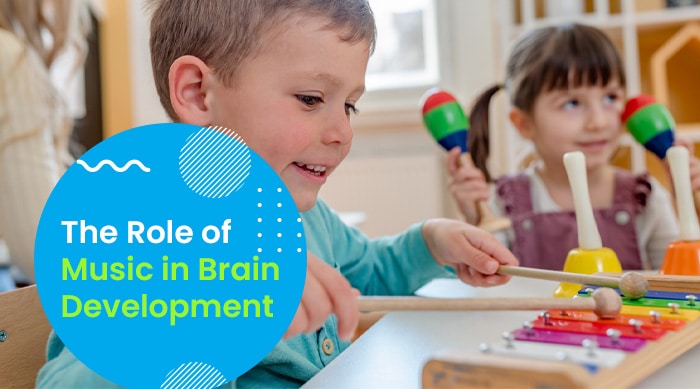
Dancing, clapping, playing instruments, and tapping to a beat all improve coordination. Whether a child is shaking a maraca or moving to “The Wiggles,” they’re developing spatial awareness, timing, and control over their movements.
These skills support other developmental milestones like handwriting, drawing, and self-care tasks.
4. Supports Emotional Development
Music helps children express feelings they may not have words for. It can calm, excite, or comfort — and it can help children learn to recognise different emotions.
Songs like “If You’re Happy and You Know It” introduce children to joy, while slower lullabies promote relaxation. Creating “feelings playlists” is a great way to help kids regulate moods.
According to Beyond Blue, music therapy is increasingly used in early intervention programs to support emotional resilience in children.
5. Encourages Social Connection
Group singing and movement promote cooperation, turn-taking, and listening. Music is often a child’s first experience with shared rhythm and coordinated activity, building the foundation for positive group interactions.
Even simple actions like passing instruments, echoing sounds, or dancing together teach collaboration and empathy.
How to Use Music at Home
You don’t need to be a musician or buy fancy instruments to enjoy the benefits of music with your child. Here are simple ways to incorporate it into your daily routine:
✔️ Start the Day with a Song
Choose a “wake-up” tune that energises your child in the morning — something fun like “Good Morning to You.”
✔️ Use Music to Transition Between Activities
Singing a tidy-up song or a handwashing rhyme helps ease transitions and builds consistency.
✔️ Create a Calm Bedtime Routine
Lullabies or soft instrumental music can signal to your child that it’s time to wind down.
✔️ Make Instruments at Home
Try rice in containers for shakers, pots and spoons as drums, or rubber band guitars — it’s the engagement, not perfection, that counts.
✔️ Sing About Daily Tasks
Turn brushing teeth, getting dressed, or packing a bag into a song. This keeps routines light and enjoyable.
Best Australian Music Resources for Kids
ABC Kids Listen – Free digital radio station with educational and fun songs
The Wiggles – Iconic Aussie music group for toddlers and preschoolers
Play School Songs – A library of engaging classics on YouTube and ABC iView
Teeny Tiny Stevies – Modern Aussie band that creates original, positive music for children
Final Thoughts: Every Child is Musical
At Read 2 Grow, we believe every child has an innate connection to music. Whether they’re clapping to a beat, humming along to a favourite tune, or swaying during storytime, music brings joy — and nurtures their growing brains in powerful ways.
So, play the music. Sing the silly songs. Dance in the lounge room. These moments of shared joy are shaping not just memories, but milestones.