
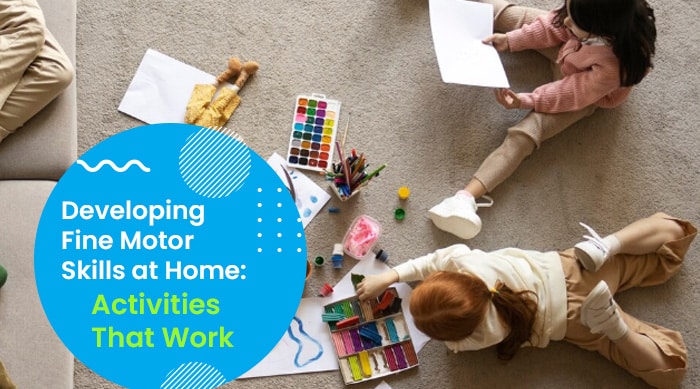
Developing Fine Motor Skills at Home: Activities That Work
Simple, Hands-On Ways to Strengthen Little Hands and Growing Minds
From tying shoelaces to holding a pencil, fine motor skills play a vital role in a child’s ability to function independently and confidently in the world. These small muscle movements — particularly those involving the hands and fingers — may seem minor, but they are foundational to writing, dressing, eating, and more.
At Read 2 Grow Early Learning Child Care Dayton, fine motor development is woven into everyday play, crafts, and routines. But what about at home? What can parents and carers do to support this crucial aspect of development?
In this blog, we’ll explore what fine motor skills are, why they matter in early childhood, and give you a toolkit of practical, fun, and screen-free activities you can do at home to strengthen your child’s little muscles — without any special equipment.
If you’re in Dayton, Brabham, or nearby and searching for “child care near me” or “Dayton child care” that actively supports your child’s development, this article (and our centre!) is for you.
What Are Fine Motor Skills?
Fine motor skills involve the small muscles in the hands, wrists, and fingers. These are responsible for tasks like:
- Holding a pencil or crayon
- Buttoning clothes or zipping up a jacket
- Using scissors
- Feeding oneself with cutlery
- Tying shoelaces
- Opening containers or snack packs
These skills build slowly over time and form the basis for school readiness and everyday independence.
Why They Matter in Early Childhood
According to the Australian Early Development Census (AEDC), children with delays in physical health and fine motor development are more likely to face challenges in classroom tasks, handwriting, and self-care activities.
When children struggle with fine motor control, they may also experience:
Frustration during everyday tasks
Poor pencil grip and handwriting
Low confidence or avoidance of “tricky” activities
That’s why early support — at home and in child care — can make a huge difference.
Signs Your Child May Need Support
Every child develops at their own pace, but signs that your child may benefit from more fine motor practice include:
- Difficulty holding crayons or pencils correctly
- Avoidance of drawing or writing
- Struggling to use scissors or open lunch containers
- Messy or clumsy self-feeding
- Trouble fastening clothing
Even if your child isn’t showing signs of difficulty, regular fine motor practice helps build strength, control, and confidence.
Everyday Activities to Strengthen Fine Motor Skills at Home
You don’t need fancy tools or therapy equipment — just creativity, encouragement, and a few simple supplies. Here are proven, engaging activities you can do together:
🧩 1. Peg Play
Using clothes pegs to clip onto boxes, string, or paper helps build finger strength and coordination.
✂️ 2. Cutting Practice
Give your child child-safe scissors and encourage cutting along lines, shapes, or even old catalogues.
✏️ 3. Drawing & Colouring
Let them scribble, trace shapes, or draw their favourite characters — it all helps improve grip and control.
🧱 4. Playdough Play
Rolling, squishing, pinching, and cutting playdough builds fine motor strength and hand flexibility.
🧵 5. Threading & Beading
Use pasta, large beads, or buttons with string to develop precision and hand-eye coordination.
🧽 6. Water Play with Squeezes
Give your child a sponge and let them soak, squeeze, and transfer water between bowls — great for strengthening hands!
🥄 7. Tweezers and Tongs
Pick up small objects like pom-poms, pasta, or beads using tongs or tweezers to refine finger control.
🧩 8. Puzzle Play
Jigsaw puzzles, shape sorters, and matching games support both problem-solving and fine motor accuracy.
📦 9. DIY Sensory Bins
Fill a tub with rice, beans, or sand. Hide objects inside for your child to pick out using scoops, cups, or fingers.
🧼 10. Washing Toys
Give your child a bowl of soapy water and a toothbrush — they’ll build hand skills while cleaning figurines or cars.
Encouraging Progress Without Pressure
- Always keep these principles in mind:
- Make it fun. Choose activities your child enjoys — not every task needs to feel like “practice.”
- Use both hands. Activities that cross the midline (e.g., passing from one hand to the other) support bilateral coordination.
- Break it up. Short sessions more often work better than long, tiring ones.
- Celebrate effort. Focus on improvement, not perfection.
Why Read 2 Grow Dayton Supports Early Development Differently
If you’re searching for child care near me, Dayton child care, or child care Brabham, and you value a learning environment that strengthens both gross and fine motor development through everyday play — then Read 2 Grow Dayton is your local expert.
Our educators are trained in observing developmental milestones and embedding fine motor activities into natural routines — from art and craft, to building, to dressing-up time. We use:
- Threading stations
- Construction corners
- Water play and sensory tables
- Cutting and gluing projects
- Mark making zones to promote pencil grip
These activities aren’t just educational — they’re engaging, joyful, and deeply important for school readiness and independence.
Enrol today or book a visit at https://www.daytonchildcare.au/thank-you/
Experience why Read 2 Grow Dayton is trusted by families across Brabham, Dayton, Bennett Springs, and beyond.
Final Thoughts: Small Hands, Big Possibilities
Developing fine motor skills may seem like a small part of the early years, but it sets children up for big milestones — writing their name, feeding themselves, tying shoes, and mastering the classroom.
At Read 2 Grow Dayton, we believe every child deserves to feel capable and confident in the world. And it all starts with playful, hands-on learning — both in our centre and in your home.