
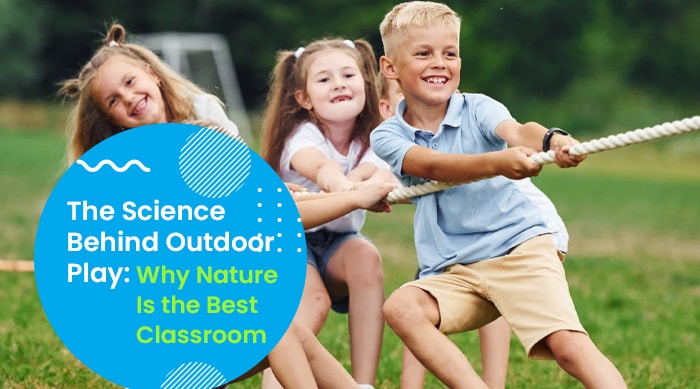
The Science Behind Outdoor Play: Why Nature Is the Best Classroom
In a world where digital screens and structured activities dominate the lives of many children, the humble backyard, park, or nature trail remains one of the most powerful learning environments a child can explore.
At Read 2 Grow Early Learning Child Care, we believe that outdoor play is more than just fun — it’s essential for healthy development.
The Science Behind Outdoor Play
But what does the science say? Why is nature considered the best classroom for young children? Let’s take a closer look.
1. Outdoor Play Enhances Physical Development
Gross motor skills like running, jumping, balancing, and climbing are crucial in early childhood. The unstructured nature of outdoor play — such as navigating uneven terrain, climbing over rocks, or balancing on logs — strengthens core muscles and improves coordination.
A study from the University of Western Australia found that children who spend more time outdoors have better movement skills than those who remain mostly indoors. These skills are the foundation for later physical activities, including sports, dancing, and even writing — which relies on shoulder and core strength.
Additionally, sunlight is vital for producing vitamin D, which supports bone development and immune function. According to the Australian Bureau of Statistics, 1 in 4 Australians is vitamin D deficient, and young children can benefit immensely from safe outdoor sun exposure during the day.
2. Nature Stimulates Cognitive Growth
Nature is filled with endless opportunities for curiosity and exploration. Every leaf, insect, cloud, and puddle becomes a learning tool. Outdoor environments spark inquiry-based learning — a style of education where children ask questions, experiment, and discover answers on their own.
In fact, the Nature Play WA initiative highlights how natural play spaces help children develop critical thinking and problem-solving skills. For example, building a cubby house from branches requires planning, teamwork, and adaptability. These experiences foster deeper cognitive development than passive or guided indoor activities.
3. Boosts Social and Emotional Intelligence
When children play outdoors, they often engage in imaginative group play. Whether it’s pretending the sandpit is a pirate ship or teaming up to create a mud kitchen menu, outdoor settings naturally encourage cooperation, negotiation, and empathy.
Outdoor play also gives children space to regulate emotions. Climbing trees or digging in the sand offers a sensory-rich way to release tension and frustration. This kind of self-regulation is a key part of developing emotional intelligence, which research shows is a better predictor of long-term success than IQ alone.
4. Improves Mental Health and Reduces Anxiety
In an era where childhood anxiety is on the rise, time spent in nature has been shown to lower stress levels and improve mood. According to research published in the Australian Journal of Psychology, children who regularly engage with green spaces exhibit fewer signs of hyperactivity and emotional distress.
Even 20 minutes of free play in a natural setting can significantly reduce cortisol (the stress hormone) levels in children. It’s a natural and accessible way to promote mental wellbeing in little ones — and parents, too.
5. Encourages Risk-Taking and Resilience
Outdoor environments present opportunities for managed risk — like climbing, balancing, or trying something new. When children take these kinds of risks, they learn important lessons about judgement, caution, and perseverance.
Educators across Australia, including those in the Early Years Learning Framework (EYLF), support the idea that calculated risk builds resilience. A child who climbs and falls learns to get back up. A child who gets dirty or faces rain learns that discomfort can be temporary and overcome.
These lessons are hard to replicate in the safety of indoor settings but are foundational to building confidence and coping skills.
6. Outdoor Play Promotes Language and Communication
Open-ended outdoor environments offer more variety for storytelling, observation, and conversation. Children often narrate their play or explain what they’re doing, especially when interacting with peers or educators.
This constant exchange enhances vocabulary and expressive language skills. A child digging for worms might learn and use words like “soil,” “slimy,” or “burrow.” These rich language opportunities don’t arise as organically in more controlled indoor activities.
How Parents Can Support Outdoor Learning at Home
You don’t need a fancy garden or nature reserve to encourage outdoor play. Here are a few easy ideas for families:
- Go on a “nature scavenger hunt” at your local park
- Create a mud kitchen using old pots and pans
- Use chalk to create outdoor obstacle courses
- Encourage unstructured time in the backyard
- Explore different textures like sand, bark, grass, and water
Let children play in the rain (safely!) — it’s part of sensory learning
Final Thoughts
At Read 2 Grow Early Learning Child Care, we believe nature is not just a backdrop — it’s a teacher. Outdoor play is a critical part of early childhood development, supporting everything from strong bodies and sharp minds to resilient hearts and compassionate spirits.
In today’s fast-paced world, giving children time to simply be children in a natural setting is one of the greatest gifts we can offer.